












You can list at least twenty different conditions that may be alleviated by using an iodine grid.
A small bottle of iodine is usually found in every home first-aid kit, as no one is immune from cuts and injuries in daily life that require immediate antiseptic treatment.
As early as the 19th century, doctors discovered that iodine solution applied to the skin works as a powerful anti-inflammatory agent.
What can an iodine grid help with?
- Detecting iodine deficiency in the body
- Relieving cough
- Treating colds and nasal congestion
- Healing bruises quickly
- Helping with various issues during pregnancy
How to make an iodine grid?
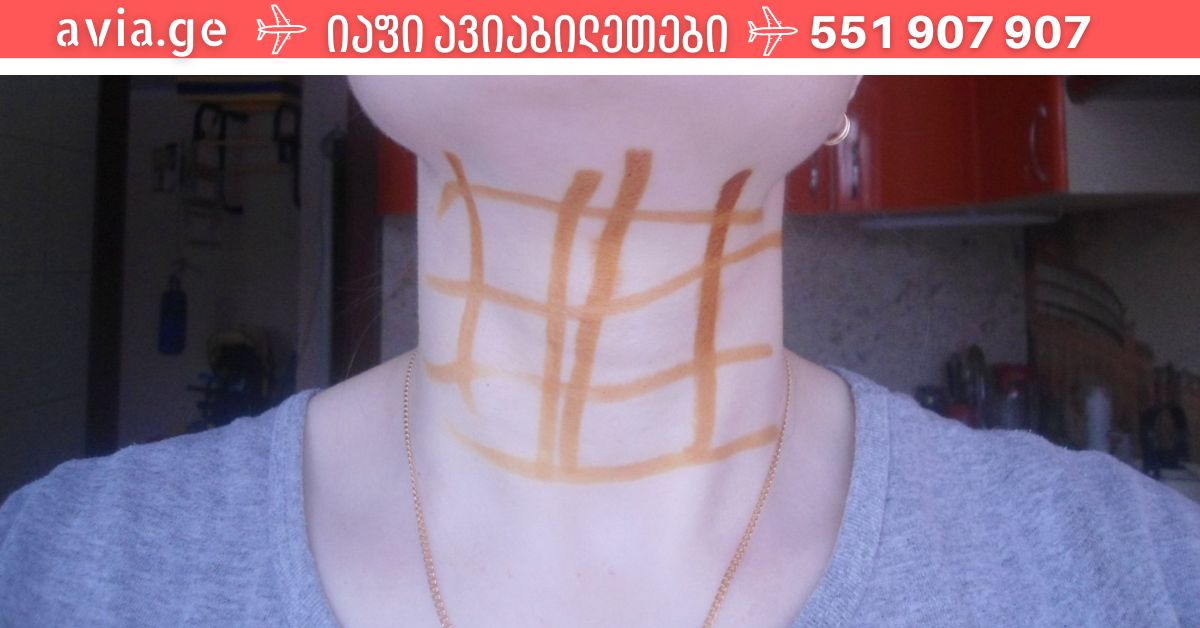
An iodine grid should be drawn on the skin using a cotton swab — the kind typically used for ear cleaning. Dip the swab in a 5% iodine solution and draw vertical and horizontal lines on the body. The ideal “cell” size of the grid should be about 1 cm x 1 cm.
As iodine penetrates through the skin into the muscle tissue and blood vessels, it damages pathogens by denaturing their proteins. The grid’s secret lies in the spacing of the “cells,” which separates groups of bacteria and causes them to die off quickly. Iodine is particularly effective against bacteria that enter the body through skin pores.
Iodine grid for iodine deficiency
According to statistics, nearly a third of the world’s population suffers from iodine deficiency, which leads to thyroid gland disorders.
To determine whether your body is getting enough iodine from food, no tests are needed — simply draw an iodine grid on the inner thigh.
- If even a trace of the grid disappears within three hours, you should consult a doctor and ask for effective iodine supplementation.
- If the iodine takes 6–8 hours to absorb, this indicates mild deficiency that can be corrected by consuming iodine-rich foods like sea fish, seafood, seaweed, etc.
- In completely healthy individuals, the grid fades only after about 24 hours.
Iodine grid for cough
Regardless of the cause of a dry cough, an iodine grid helps localize inflammation at an early stage. As it penetrates the skin and blood vessels, it boosts circulation. However, an iodine cough grid is only recommended when body temperature does not exceed 38°C.
- The grid can be drawn on the throat (in case of sore throat) or chest (for bronchitis or pneumonia).
- If your skin is sensitive, try a small patch first. If there’s no burning or itching after 10–15 minutes, you can proceed with a full grid.
- The throat grid can be used twice a day — morning and evening.
Iodine grid for colds
Those looking to stop a runny nose quickly will find the iodine grid very useful.
- Draw fine, neat lines on the bridge and wings of the nose.
- Be careful, as facial and neck skin is more sensitive and prone to burns.
- During a cold, it’s also effective to apply the grid to the soles of the feet and calf muscles.
Iodine grid for bruises
If you’re unsure how to treat a bruise, the iodine grid can help.
However, do not apply it in the first hours after injury. Start only a day later.
- Apply cold first (like ice wrapped in cloth) to reduce swelling.
- On the second day, begin iodine treatment to speed up healing.
Iodine grid during pregnancy
Pregnant women are advised to use iodine grids to replenish iodine deficiency.
Additionally, it can help relieve cold symptoms when choosing pharmaceutical remedies is tricky during pregnancy. Iodine is considered a natural and safe alternative.