







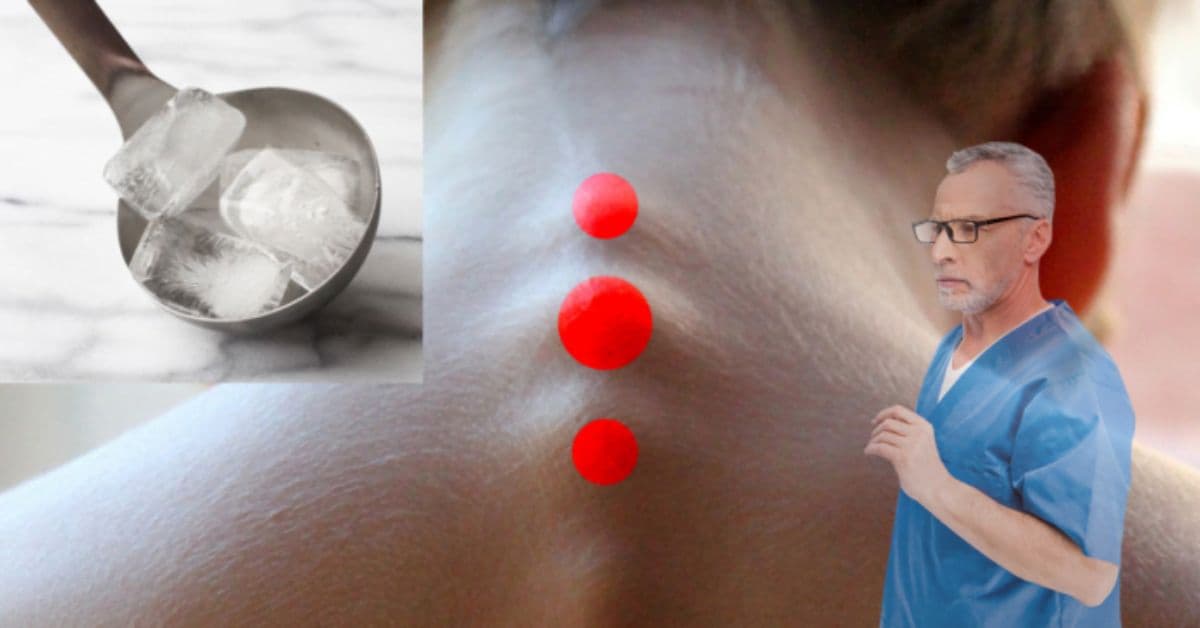
Alternative wellness practices often travel across cultures and generations, attracting attention for their simplicity and accessibility. Among the many techniques discussed in traditional Eastern health philosophies, one particularly unusual method continues to spark curiosity: applying an ice cube to a specific point at the back of the neck.
While this practice is frequently mentioned in popular wellness discussions, it is important to approach the subject with clarity and realism. No single technique can cure a wide range of medical conditions, and any claims suggesting otherwise should be treated with caution. However, examining why such methods gained popularity can offer interesting insight into cultural health traditions.
Understanding the Concept Behind the Practice
In traditional Chinese health philosophy, the human body is sometimes described as a complex energetic system. Within this framework, various points on the body are believed to play roles in regulating balance, vitality, and functional harmony. One such location, commonly referenced in alternative wellness circles, is known as the Fen-Fu point.
This point is typically described as an area located at the base of the skull, where the neck meets the head. In traditional interpretations, it is associated with nervous system activity and overall physiological balance. Modern medical science does not formally recognize these energetic descriptions, yet the concept remains widely discussed in holistic wellness communities.
Why the Ice Cube Method Attracts Attention
The appeal of this technique largely stems from its simplicity. Unlike complex treatments or expensive products, the method requires only a small piece of ice and a few minutes of time. Supporters of the practice often describe sensations of refreshment, alertness, or temporary invigoration following application.
Physiologically, cold exposure can stimulate nerve endings and influence local blood vessel behavior. Cold may briefly constrict vessels, followed by reactive dilation once the stimulus is removed. This basic biological response is well understood, though its broader health implications are frequently overstated in popular narratives.
Locating the Fen-Fu Area
Descriptions of the Fen-Fu point typically place it at the slight hollow found just below the base of the skull, along the midline at the back of the neck. This region corresponds anatomically to where the cervical spine connects to the head.
Despite common claims in wellness folklore, there is no anatomical gap where “nothing separates the skin from the brain.” Multiple protective structures exist, including bone, connective tissue, and membranes. Misleading descriptions often arise from simplified interpretations rather than factual anatomy.
How the Technique Is Commonly Performed
Traditional instructions for this practice tend to follow a similar pattern. Individuals are usually advised to lie down comfortably, position a small ice cube on the specified area, and leave it in place for a short duration.
The procedure is often outlined as follows:
- Lie on your stomach or sit comfortably
- Place a small ice cube at the base of the skull
- Secure it gently with fabric if necessary
- Leave it in place briefly, avoiding discomfort
Some variations recommend performing the technique once or twice daily, frequently in the morning or evening.
Sensations People Commonly Report
Individuals who experiment with cold stimulation of the neck frequently describe a sequence of sensations. Initial coldness may be followed by a feeling of warmth as the skin adapts. This response is a normal thermoregulatory reaction rather than a unique therapeutic effect.
Cold stimulation may also produce a temporary sense of alertness. Sudden temperature changes can activate sensory receptors, contributing to a subjective feeling of refreshment. Such effects are typically short-lived and vary significantly between individuals.
Claims Versus Evidence
Popular articles and social media posts often attribute remarkably broad benefits to the ice cube method, ranging from improved digestion to relief from chronic diseases. These claims lack robust clinical validation.
Cold exposure has recognized physiological effects, yet there is no reliable scientific consensus supporting the idea that this technique can treat systemic medical conditions. Responsible discussion requires distinguishing between subjective experiences and evidence-based medicine.
Safety Considerations
Applying ice directly to the skin for extended periods may carry risks. Prolonged cold exposure can irritate the skin, trigger discomfort, or in rare cases contribute to mild cold-related injury.
Individuals with circulatory disorders, nerve sensitivity, or certain medical conditions should exercise caution. If discomfort, pain, or unusual reactions occur, the procedure should be discontinued.
Why Such Practices Persist
Human curiosity about simple wellness techniques is understandable. Methods that appear natural, inexpensive, and easy to perform naturally attract attention. Cultural storytelling further amplifies interest, particularly when framed through personal anecdotes.
However, anecdotal popularity does not equate to medical reliability. Balanced interpretation is essential when evaluating traditional or alternative practices.
A Realistic Perspective
Cold stimulation of the skin may indeed produce temporary sensory effects. Some individuals may find the experience refreshing or invigorating. Yet expectations should remain grounded.
No simple external technique can replace professional healthcare, medical diagnosis, or scientifically supported treatment. Wellness practices may complement healthy lifestyles, but they should never be viewed as universal cures.
Final Thoughts
The ice cube technique associated with the Fen-Fu area remains an intriguing example of how traditional ideas intersect with modern curiosity. While the practice may offer a brief sensory experience for some, its reputed medical powers are frequently exaggerated.
Anyone experiencing persistent health concerns should consult qualified medical professionals. Reliable healthcare decisions must always be guided by evidence, safety, and individual medical context.
Vau.ge – Your Daily Guide for Practical Advice!
Vau.ge is a place where caring for your health, beauty, and daily routines becomes a natural, accessible, and enjoyable experience. Our main goal is to provide you with reliable information about natural remedies, homemade recipes, and practical tips that help you live a healthier life, look better, and simplify your everyday tasks without unnecessary expenses.
Our tips are easy to incorporate into your everyday life — whether it’s skincare, haircare, health-boosting remedies, or small tricks to save time. This knowledge will not only improve your own life but also allow you to share the experience with others, giving more people the chance to live a balanced life naturally and economically.
Please note: The articles on our website are for informational purposes only and do not replace professional medical advice. If you have serious health concerns, please consult a qualified specialist.