



Every New Year, thousands of families prepare gozinaki believing they know exactly how it should be made. Walnuts, honey, heat — it looks simple. Familiar. Almost automatic.
That’s what I thought too.
Until one New Year’s Eve, standing in the kitchen with honey slowly warming on the stove, I felt a familiar presence behind me. My mother-in-law wasn’t speaking. She was watching. Carefully. Quietly. The way only Georgian mothers-in-law do.
After a long silence, she finally said:
“If you continue like this, you’ll ruin everything.”
That was the moment I realized something important: gozinaki is not forgiving. It remembers every mistake. And most people repeat the same ones every year without even knowing it.
Before you make gozinaki this year, read this carefully. These are the 7 mistakes that truly ruin everything — passed down not from cookbooks, but from kitchens where tradition still matters.
Mistake #1: Choosing the Wrong Honey
This is where failure often begins.
Many people think stronger honey means better gozinaki. Chestnut honey, forest honey, dark honey — it sounds impressive, but it’s wrong. Strong honey dominates the dessert and erases the delicate walnut aroma.
Traditional gozinaki demands acacia (May) honey. Its mild, clean sweetness allows the walnuts to remain the main character. As my mother-in-law once said, “If the honey shouts, the walnut disappears.”
Balance is everything.
Mistake #2: Pouring Boiling Water on Walnuts
This shortcut is popular — and destructive.
Yes, boiling water makes peeling walnuts easier. But it also strips them of their natural oils and aroma. Walnuts treated this way become flat, lifeless, and dull.
My grandmother used to say that walnuts must be handled gently, like something alive. Hot water kills their character. If you want gozinaki that smells like New Year, never pour boiling water on walnuts.
Mistake #3: Roasting Chopped Walnuts
This mistake ruins texture and flavor at the same time.
Chopped walnuts burn fast. Even a few seconds too long, and bitterness appears — and bitterness has no place in gozinaki. Once it’s there, nothing can fix it.
If you roast walnuts, always roast whole halves first, then chop them afterward. This protects the nut, preserves aroma, and gives you control.
Mistake #4: Skipping Sugar Because “Honey Is Enough”
This mistake sounds logical, but it’s wrong.
Sugar is not added for sweetness. It is added for structure. Even a small amount helps bind honey and walnuts together into one strong, unified mass.
Without sugar, the mixture separates. Honey leaks out. Walnuts fall apart. The gozinaki looks fine at first — and then collapses.
My mother-in-law never negotiates with this rule. “A little sugar,” she says, “keeps everything together — just like in life.”
Mistake #5: Using a Plastic Board
This mistake looks harmless. It isn’t.
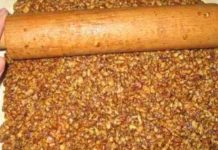
Plastic boards cause sticking, uneven cooling, and damaged edges. They ruin the final shape and texture. Traditional gozinaki has always been shaped on wooden boards, and not out of superstition.
Wood absorbs moisture correctly, balances temperature, and allows clean shaping. Plastic does none of this.
When my mother-in-law saw me reaching for a plastic board once, she didn’t stop me. She just said: “You’ll regret it.”
She was right.
Mistake #6: Waiting for the Mixture to Cool
Hesitation ruins gozinaki.
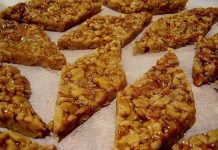
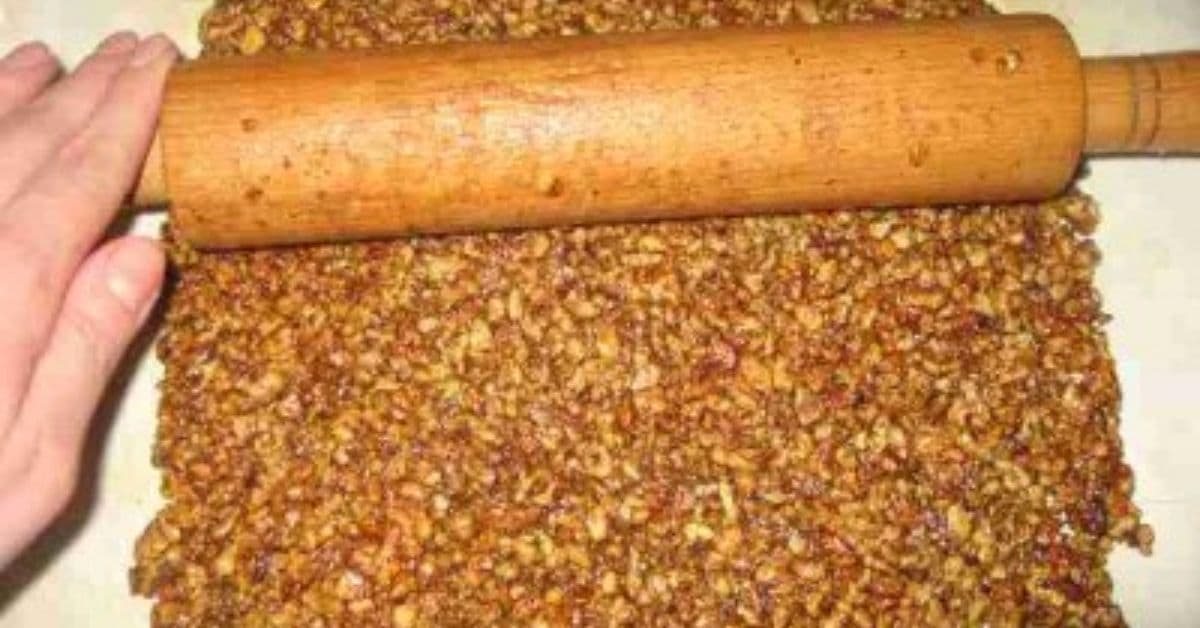
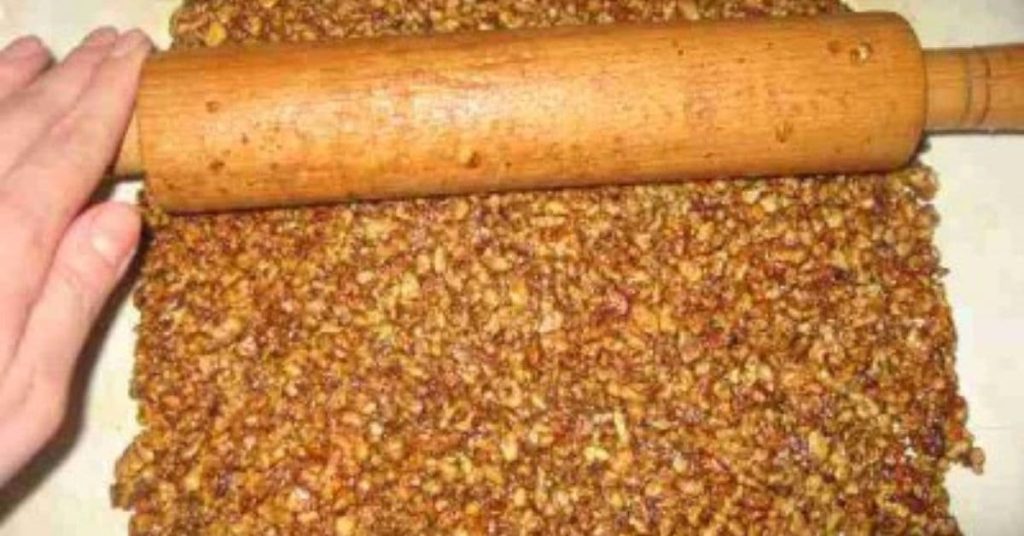
Once the honey and walnut mixture is placed on the board, there is no time to think, answer phones, or hesitate. It must be flattened and cut immediately, while still hot.
If you wait, it hardens. If it hardens, you don’t cut gozinaki — you break it.
My grandmother used to say: “Honey doesn’t wait for anyone.”
Mistake #7: Forgetting to Wet Everything
This is the quietest mistake — and the one most often ignored.
The wooden board, rolling pin, knife, and tray must all be slightly wet. Dry tools steal honey, tear surfaces, and create rough edges.
Wet tools allow smooth work. Clean cuts. Calm hands. This small detail separates beautiful gozinaki from a messy one.
Why These Rules Are Never Written Down
Georgian kitchens don’t rely on written recipes. They rely on observation. Mothers-in-law and grandmothers don’t explain everything at once. They wait. They watch. And only when you’re ready do they speak.
These rules are not about control. They are about respect — for ingredients, for tradition, and for time.
Gozinaki is not just a sweet. It is a test. Of patience. Of discipline. Of whether you rush — or listen.
A New Year Sweet That Remembers Everything
Gozinaki carries the energy of how it was made. Careless hands create careless texture. Rushed honey creates fragile structure. Ignored details return as broken pieces.
But when done right — slowly, attentively, respectfully — gozinaki becomes something else entirely. Firm, glossy, aromatic, and lasting. Just like a good year should be.
Final Thought
Before you make gozinaki this year, ask yourself one question:
Are you cooking — or are you listening?
Because every grandmother knows this truth:
Gozinaki forgives nothing, but rewards respect.
And once you learn that, your New Year’s table will never be the same again.
Vau.ge – Your Daily Guide for Practical Advice!
Vau.ge is a place where caring for your health, beauty, and daily routines becomes a natural, accessible, and enjoyable experience. Our main goal is to provide you with reliable information about natural remedies, homemade recipes, and practical tips that help you live a healthier life, look better, and simplify your everyday tasks without unnecessary expenses.
Our tips are easy to incorporate into your everyday life — whether it’s skincare, haircare, health-boosting remedies, or small tricks to save time. This knowledge will not only improve your own life but also allow you to share the experience with others, giving more people the chance to live a balanced life naturally and economically.
Please note: The articles on our website are for informational purposes only and do not replace professional medical advice. If you have serious health concerns, please consult a qualified specialist.