









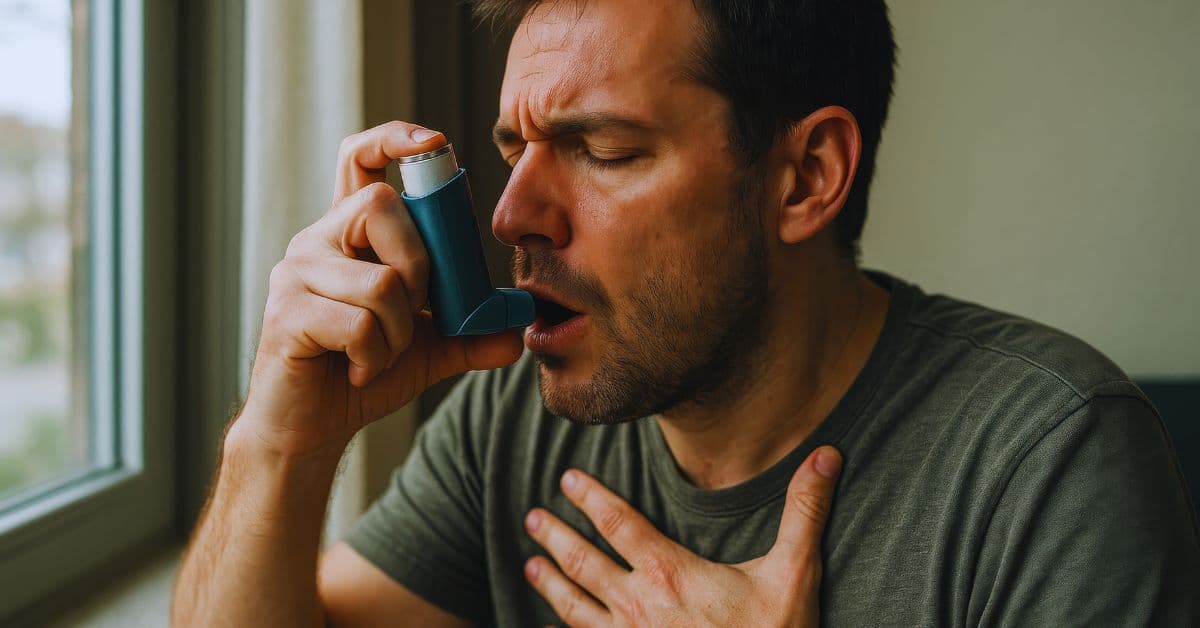
For more than fifteen years, asthma controlled my life.
Every morning began with a feeling of heaviness in my chest. The wheezing, the struggle for every breath, the fear of an attack — they followed me like shadows. I couldn’t climb stairs without gasping for air. I couldn’t laugh too hard or walk fast. Even a small cold could turn into days of coughing and suffocation. I lived carefully, constantly watching for triggers — dust, smoke, even a change in the weather.
I tried everything: inhalers, tablets, steroid sprays, herbal teas, and even expensive treatments abroad. Nothing seemed to bring real, lasting relief. My condition only improved temporarily, and soon after, the attacks would return — stronger than before.
Until one day, everything changed.
The Turning Point
It happened during one of my worst asthma attacks.
I was hospitalized, struggling to breathe despite all the medications and oxygen. I still remember the sound of my breath — short, shallow, desperate. In the next bed lay a woman, about my mother’s age. Her calmness amazed me; she looked peaceful, breathing steadily without effort.
When I asked about her secret, she smiled gently and said,
“I used to be just like you — afraid to sleep without my inhaler beside me. But I healed myself through breathing exercises. Slowly, patiently, every day.”
I thought she was joking. Breathing exercises? For asthma?
But she wasn’t. She shared her entire routine with me — the technique that had helped her regain full control over her breathing. Her confidence inspired me more than any doctor ever had.
The next morning, I decided to try it myself.
The Beginning of My Breathing Journey
At first, it felt strange — to rely only on my breath, not medicine.
But I promised myself I would give it a fair chance. I began exactly as she had taught me.
I sat comfortably on a chair, relaxed my shoulders, closed my eyes, and tried to focus on healing. Before starting, I spent about five minutes creating a calm mental state — imagining my lungs cleansing, expanding, filling with light and energy. Then I began the actual breathing practice.
For the first week, I inhaled slowly and deeply through my nose for 8 seconds, letting my stomach rise with the air. I then held my breath for 8 seconds, and finally exhaled gently for 8 seconds. This rhythm — 8-8-8 — became my focus for ten minutes every day.
In those ten minutes, I completed around 25 full breathing cycles.
The first few days were not easy. Sometimes I felt dizzy, sometimes anxious. My body wasn’t used to slow, controlled breathing. But I kept going. Something inside told me not to give up.
The Transformation Begins
After a few sessions, the uncomfortable sensations faded. I began to feel lighter. It was as if every breath was cleaning something deep inside me — clearing the fog, easing the tightness in my chest. My heart rate stabilized, and I noticed I could go longer without wheezing. My lungs, once weak and constricted, started to open up.
Encouraged by this progress, I continued.
During the second week, I followed the same routine — five minutes of calm, ten minutes of breathing — but slightly changed the rhythm. I increased the time to 10 seconds for each stage: inhale, hold, exhale. I also alternated nostrils — inhaling through one, exhaling through the other. This gentle switch made my lungs feel even more balanced, as if both sides were being trained equally.
By the third week, my endurance improved noticeably. The technique stayed the same, but I extended my breathing: 15 seconds inhaling, 10 seconds holding, and 15 seconds exhaling. I could now feel my diaphragm moving freely and powerfully — something I hadn’t experienced in years.
By the fourth week, my rhythm became 20-10-20 — 20 seconds of inhalation, 10 of holding, and 20 of exhalation.
I had come a long way from where I started. I could now climb stairs without stopping. I could laugh without coughing. I could sleep through the night without gasping for air.
It felt like a miracle — but one created through discipline, not magic.
The Science Behind the Simplicity
At first, I didn’t understand why this method worked.
But later I learned that controlled breathing increases the amount of oxygen in the blood and improves lung elasticity. By training the diaphragm — the main breathing muscle — the lungs expand more fully, helping release trapped air that often causes tightness in asthma.
The slow rhythm also activates the parasympathetic nervous system — the body’s natural “calm” mode — reducing inflammation and stress hormones that can worsen asthma attacks.
When we breathe consciously, we strengthen every cell with oxygen, helping the body detoxify and repair itself. In other words, breathing correctly doesn’t just heal the lungs — it heals the entire system.
What I Learned About Asthma Management
After months of daily practice, my a
sthma attacks became rare and mild. I still kept my inhaler with me — just in case — but I barely needed it anymore.
Here are the most valuable lessons I learned along the way:
- Patience is everything.
You may not feel better right away. Healing takes time, but every breath counts. - Never force the breath.
Asthma lungs are sensitive. Breathe softly and naturally — not aggressively. - Consistency heals.
Ten minutes every day is more powerful than one hour once a week. - Stay mentally calm.
The mind and lungs are deeply connected. Anxiety can tighten your chest instantly. That’s why relaxing before starting the exercise is essential. - Avoid known triggers.
Keep your environment clean, avoid smoke, and stay away from allergens — even the best breathing routine needs clean air to work. - Hydration matters.
Drinking warm water throughout the day helps thin mucus and ease breathing.
How to Do the Practice Yourself
If you wish to try this technique, start slowly and safely:
- Sit on a chair with your back straight.
- Relax completely.
- Breathe in through your nose for 8 seconds, feeling your belly expand.
- Hold your breath for 8 seconds.
- Exhale gently for 8 seconds.
- Repeat for 10 minutes daily, ideally in the morning.
After a week, increase each phase to 10 seconds, then to 15, and eventually to 20 — as your body adapts.
Always listen to your body. If you feel dizzy, pause for a moment and continue calmly.
Living Without Fear
It has now been several years since that hospital day. I still practice my breathing every morning. It has become more than just a medical routine — it’s a form of meditation, a connection to my body and the world around me.
I no longer live in fear of asthma.
I travel, I hike, I laugh, and I sleep peacefully.
The woman I met in that hospital bed changed my life — not with medicine, but with the simplest gift of all: breath.
Sometimes healing doesn’t come in the form of a pill or injection.
Sometimes, it comes from within — one mindful breath at a time.
Vau.ge – Your Daily Guide for Practical Advice!
Vau.ge is a place where caring for your health, beauty, and daily routines becomes a natural, accessible, and enjoyable experience. Our main goal is to provide you with reliable information about natural remedies, homemade recipes, and practical tips that help you live a healthier life, look better, and simplify your everyday tasks without unnecessary expenses.
Our tips are easy to incorporate into your everyday life — whether it’s skincare, haircare, health-boosting remedies, or small tricks to save time. This knowledge will not only improve your own life but also allow you to share the experience with others, giving more people the chance to live a balanced life naturally and economically.
Please note: The articles on our website are for informational purposes only and do not replace professional medical advice. If you have serious health concerns, please consult a qualified specialist.